
BigCommerce Fraud Payment Detection That Works
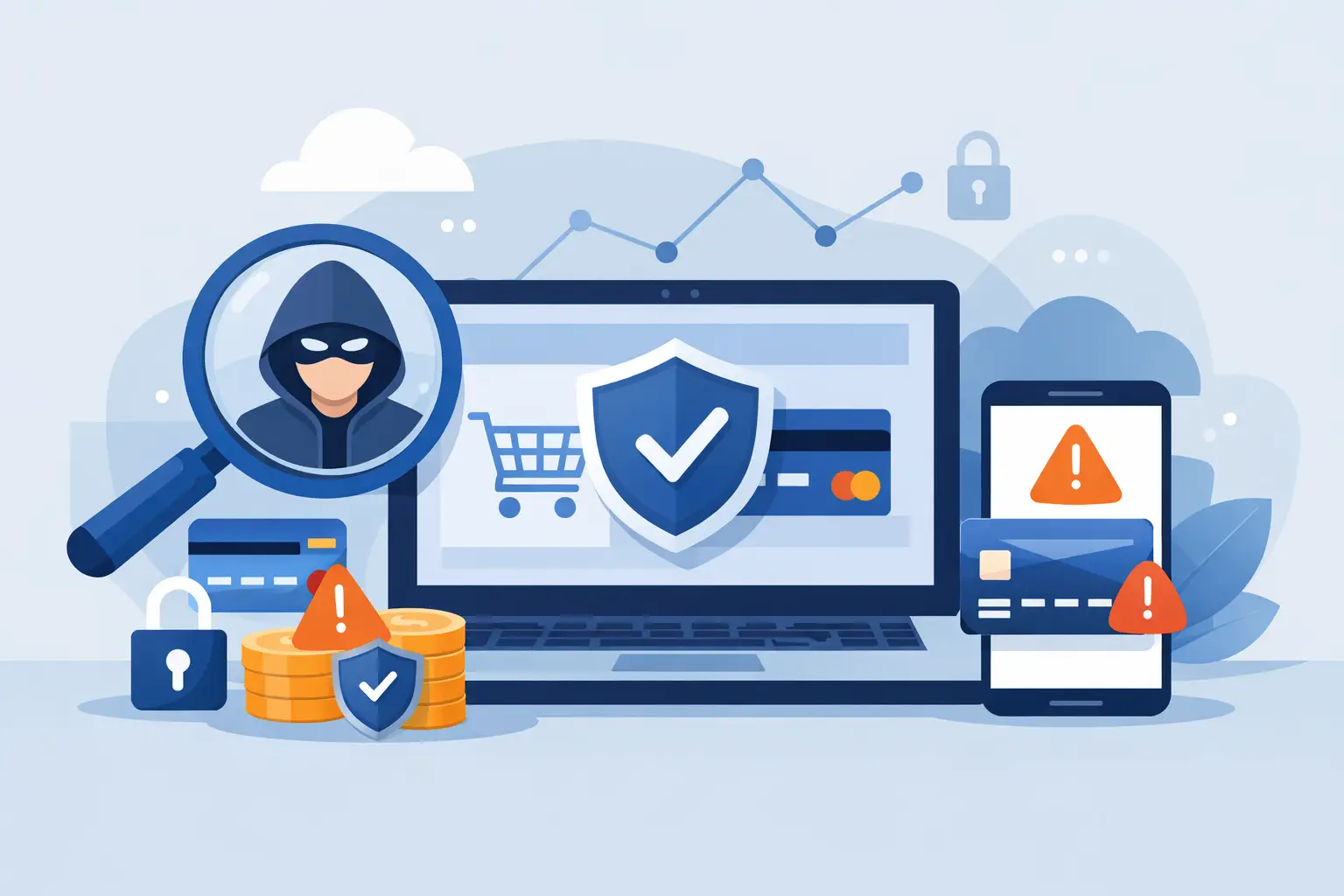
Every growing store hits the same wall eventually: more orders should mean more revenue, but fraud, payments, detection, bigcommerce issues can quietly erode margin, trigger chargebacks, and create operational drag. The hard part is not spotting obviously bad orders. It is catching risky transactions without slowing down legitimate customers who are ready to buy.
For established brands on BigCommerce, fraud detection is not a plugin decision. It is a systems decision. The right setup has to balance checkout conversion, payment approval rates, manual review workload, and downstream operational risk. If one of those breaks, the rest usually follows.
Where BigCommerce fraud payment detection gets complicated
BigCommerce gives merchants a solid commerce foundation, but fraud prevention is rarely solved at the platform layer alone. Risk does not live in one place. It shows up in payment gateway signals, customer behavior, shipping patterns, device fingerprints, velocity spikes, and order history across channels.
That matters because fraud is rarely static. A ruleset that worked six months ago can start failing when you expand into new markets, run a large promotion, or add high-risk product categories. Teams often discover this too late, usually after a spike in chargebacks or a sudden drop in payment approvals.
Native fraud indicators can be useful for basic screening, but they are not enough for complex merchants with higher order volume, multiple payment methods, or custom checkout and fulfillment logic. If your business has ERP sync, custom shipping rules, B2B workflows, or blended online and retail operations, fraud decisions need to fit the rest of the stack.
What effective fraud detection on BigCommerce should actually do
Strong fraud controls do more than block bad orders. They should help you approve more good ones with confidence. That means the best systems are designed around accuracy, not just restriction.
A practical BigCommerce fraud payment detection setup usually combines several layers. Payment gateway verification checks are one layer. Behavioral analysis is another. Order-level business rules add context that generic tools often miss. For example, a high-ticket order shipping overnight to a freight forwarder may deserve a different treatment than a repeat customer placing the same value order to a verified home address.
The strongest implementations also account for operational reality. A fraud stack that sends too many orders into manual review creates bottlenecks for support, fulfillment, and finance. A stack that auto-cancels aggressively can hurt customer lifetime value and distort campaign performance data. The goal is controlled decision-making at speed.
Common failure points in BigCommerce fraud payment detection
Most fraud setups break in predictable ways. The first is overreliance on static rules. Simple filters like mismatched billing and shipping addresses, international IPs, or order value thresholds can catch obvious fraud, but they also create false positives. For brands with mobile-heavy customers, gift purchases, or cross-border demand, those patterns are not unusual.
The second is disconnected tooling. If your gateway, fraud tool, OMS, and customer service workflows are not aligned, teams make decisions with partial information. An order may look risky in one system and completely normal in another. That gap increases review time and inconsistency.
The third is ignoring post-purchase signals. Fraud prevention should not stop at authorization. Refund behavior, repeat dispute patterns, failed delivery attempts, and account changes can all feed smarter risk decisions over time. Stores that treat fraud as a checkout-only problem usually miss the broader pattern.
How to build a better detection model
Start with your own order data, not vendor defaults. Look at chargeback history, approval rates, average order value by channel, shipping destination patterns, and repeat customer behavior. That gives you a baseline for what normal looks like in your business.
From there, build review logic around actual risk clusters. Instead of flagging every large order, isolate combinations that correlate with fraud in your store. That could be first-time customers using expedited shipping on limited-stock items, or a surge of transactions from one region tied to one payment type. This is where custom logic often outperforms generic presets.
Integration quality matters just as much as rule quality. If BigCommerce is connected cleanly to your payment gateway, ERP, CRM, and fulfillment systems, you can enrich fraud decisions with inventory status, customer tenure, support history, and channel attribution. That leads to better approval decisions and less manual noise.
For more complex merchants, this is usually where agency or engineering support creates real value. Not because fraud tools are hard to install, but because the business logic behind them needs to reflect actual operations. Lantera approaches this kind of problem the same way it approaches broader commerce architecture: reduce friction, preserve performance, and design for scale.
What leaders should measure
Chargeback rate is the obvious metric, but it is not the only one that matters. If you lower chargebacks by rejecting too many legitimate orders, you have not solved the problem. You have shifted it.
A more useful scorecard includes payment authorization rate, false positive rate, manual review volume, time-to-decision, and post-review approval percentage. Together, those metrics show whether your fraud controls are protecting margin without dragging down conversion.
It also helps to review fraud performance after major business changes. New product launches, new geographies, wholesale channels, subscription models, and aggressive paid acquisition can all change your fraud profile quickly. Detection logic should evolve with the business, not lag behind it.
BigCommerce can absolutely support a strong fraud prevention strategy, but only when the setup reflects the realities of your payment stack, customer behavior, and operations. The stores that handle this best do not treat fraud as a one-time app install. They treat it as an ongoing performance discipline tied directly to revenue quality.