
Multi Warehouse Inventory Management That Scales
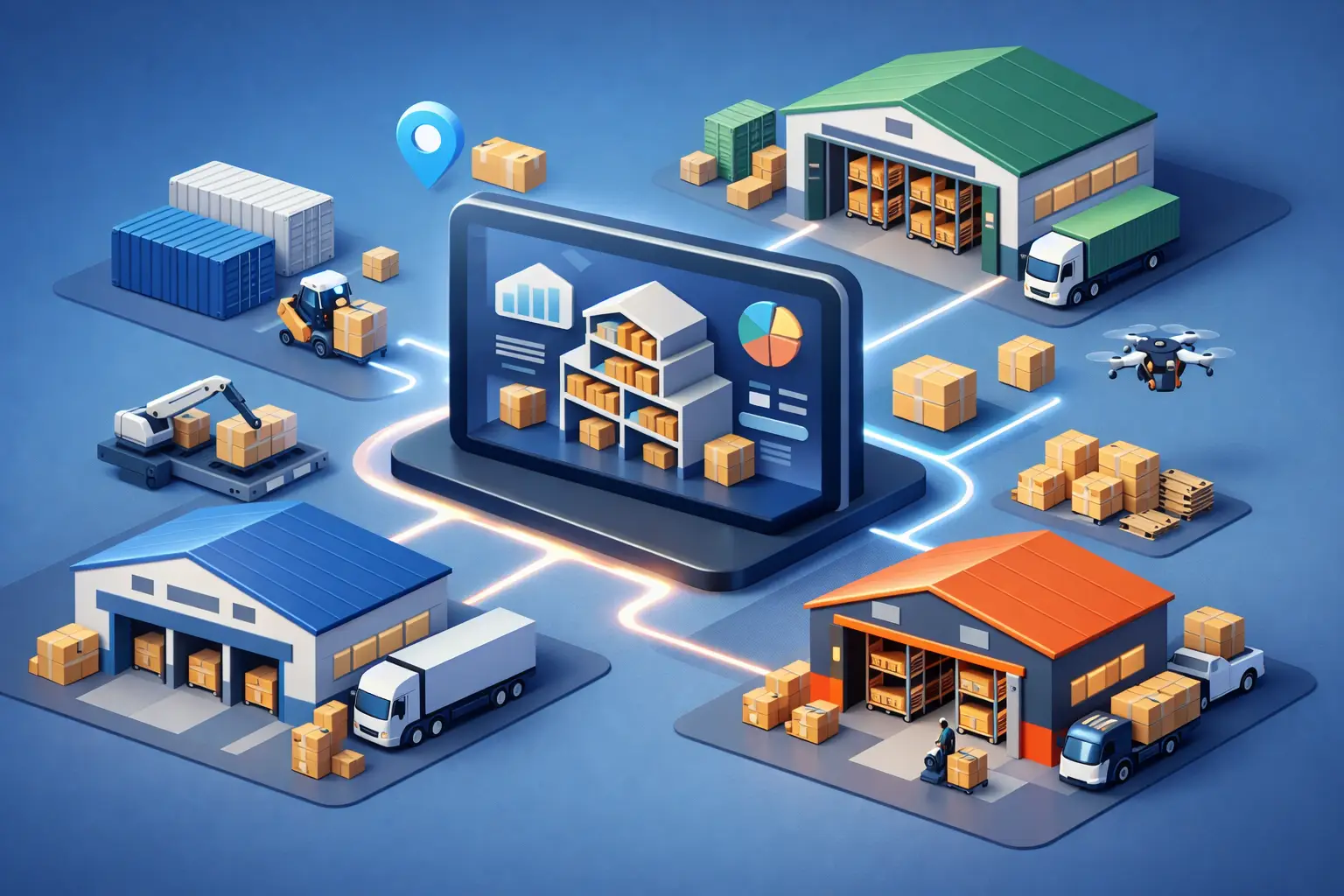
A brand opens a second warehouse to cut shipping times, then a third to support wholesale, retail, and marketplace demand. Revenue goes up, but so do stock discrepancies, split shipments, and support tickets. That is the point where multi warehouse inventory management stops being an operations side project and becomes core commerce infrastructure.
For growing retailers, inventory complexity rarely comes from volume alone. It comes from channel mix, fulfillment promises, and disconnected systems making different assumptions about what is actually available. If Shopify says one thing, the ERP says another, and the 3PL has not pushed an update in 20 minutes, your storefront is selling fiction.
Why multi warehouse inventory management gets difficult fast
Single-location inventory is simple because there is one source of truth, one pick path, and fewer edge cases. Multi-location operations introduce competing priorities. You are not just tracking quantity on hand. You are deciding which warehouse should fulfill which order, how to reserve stock across channels, and when inventory should become sellable, unavailable, or redirected.
That complexity increases when each warehouse serves a different role. One may be optimized for direct-to-consumer orders, another for B2B pallets, and another for marketplace overflow or regional delivery speed. The inventory is technically part of the same business, but functionally it is not interchangeable without rules.
A lot of brands try to solve this with manual processes for too long. Spreadsheets, platform apps, and warehouse-specific workarounds can survive at low order volume. They break once order velocity increases or when returns, preorders, bundles, subscriptions, and transfer orders start hitting the same inventory pool.
What good multi warehouse inventory management actually requires
The technical challenge is not just syncing stock between systems. It is establishing clear inventory states and making sure every system respects them.
At a minimum, you need a consistent model for quantity on hand, available to sell, allocated, incoming, damaged, quarantined, and committed across channels. If those definitions differ between your ecommerce platform, ERP, WMS, and marketplace connectors, bad decisions happen automatically.
You also need fulfillment logic that reflects business priorities. The nearest warehouse is not always the right warehouse. Sometimes margin matters more than speed. Sometimes preserving stock in a strategic location matters more than lowering one shipment cost. Sometimes a retail store should never be used for ecommerce fulfillment below a minimum threshold. These are not platform settings in isolation. They are operational rules that need technical enforcement.
That is why architecture matters. A mid-market brand with two warehouses and a simple DTC flow may work well with native platform inventory features plus targeted integration logic. A brand operating across Shopify, Amazon, a wholesale portal, multiple 3PLs, and an ERP usually needs a stronger orchestration layer. There is no universal stack that fits every inventory model.
The systems involved in multi warehouse inventory management
Most inventory failures are integration failures wearing an operations label. The problem is not that teams do not understand stock. The problem is that each system owns a different part of the truth.
Your ecommerce platform controls product visibility and checkout availability. The ERP often owns purchasing, accounting, and sometimes the master inventory ledger. The WMS controls warehouse execution. A POS may affect store-level stock. Marketplaces add their own latency and reservation behavior. Then there are returns platforms, subscription tools, bundle logic, and product customization workflows that can all change what should be sellable.
When those systems are connected loosely, inventory updates arrive late, partially, or in the wrong order. A cancellation may not release stock correctly. A transfer order may reduce inventory in one location before the receiving warehouse confirms it. A return may be physically received but not marked as available to sell. None of these issues are rare. They are common in businesses that have grown faster than their systems.
This is where implementation discipline matters more than app count. A reliable setup defines a primary source of truth, event priorities, fallback behavior, and failure handling. If an update fails, what happens next? If two systems send conflicting stock values, which one wins? If a warehouse goes offline, how does order routing change? Those are the questions that separate scalable operations from expensive guesswork.
Order routing is where inventory strategy becomes customer experience
Customers do not care which node fulfilled their order. They care whether the product was actually available, whether shipping was fast, and whether partial shipments were avoided. Multi warehouse inventory management directly affects all three.
A strong routing model considers geography, stock depth, order value, SKU compatibility, shipping method, and warehouse capabilities. It should also account for exceptions. Hazmat items, personalized products, refrigerated goods, oversized products, or wholesale-only SKUs may need dedicated fulfillment paths.
The trade-off is that more routing intelligence can create more operational complexity. If your logic is too simplistic, fulfillment costs rise and service levels fall. If it is too complex, debugging becomes difficult and warehouse teams lose confidence in the system. The goal is not maximum logic. It is appropriate logic that can be maintained.
For many brands, the best design is a rule hierarchy. Start with non-negotiables such as warehouse eligibility and inventory thresholds. Then apply optimization rules like nearest location or lowest shipping cost. Finally, define exception handling for backorders, split shipments, and substitutions. That structure is easier to test and easier to change as the business evolves.
Common failure points that create inventory noise
Overselling gets the most attention, but it is only one symptom. Inventory distortion often starts earlier.
Bundled products are a common culprit because component availability and bundle availability are not always updated in sync. Returns create another gap, especially when inspection status is disconnected from storefront availability. Transfer inventory is also frequently mishandled. Brands count it twice, not at all, or leave it in limbo between facilities.
Promotions introduce pressure as well. A marketing team launches a campaign based on total network inventory, while operations knows only a fraction is available in the right locations. The result is not just customer disappointment. It is margin erosion from avoidable split fulfillment, expedited shipping, and manual intervention.
These issues are fixable, but usually not with surface-level patches. If the underlying model of inventory states is weak, adding more sync tools just spreads the problem faster.
How to approach implementation without overengineering
The right solution depends on channel complexity, warehouse count, order volume, and how much inventory logic already lives in your ERP or WMS. That said, the implementation path is usually clear.
Start by mapping the full inventory lifecycle, not just stock updates. Include purchasing, receiving, transfers, reservations, fulfillment, returns, and exception handling. Then identify which system should own each event. This often exposes duplicated logic or blind spots immediately.
Next, define location-level rules in business terms before translating them into platform behavior. For example, decide whether store inventory can be sold online, whether safety stock differs by channel, and whether certain warehouses should only activate when other locations fall below threshold. If those rules are not explicit, development becomes guesswork.
After that, test with real scenarios instead of ideal ones. Use edge cases like partial cancellations, split bundles, simultaneous marketplace orders, damaged returns, and late warehouse acknowledgments. Inventory architecture usually passes happy-path testing. It fails under operational friction.
This is also where an experienced technical partner can change the outcome. Not because the problem is mysterious, but because platform-native features, middleware, and custom logic need to be chosen in the context of your actual business model. Lantera typically approaches this kind of work by aligning commerce, ERP, and fulfillment logic first, then building the least complicated architecture that can still absorb growth.
What better inventory infrastructure changes for the business
When multi warehouse inventory management is done well, the gains are measurable. Oversells drop. Split shipments decline. Transfer decisions improve. Merchandising teams trust stock availability. Customer support spends less time explaining preventable issues. Finance gets cleaner inventory reporting. Operations can add fulfillment nodes without creating chaos.
It also creates room for better commerce strategy. You can promise faster delivery with confidence. You can segment inventory by channel without constantly losing visibility. You can support wholesale and DTC from the same broader network without treating every order like a special case.
The most valuable outcome, though, is not just accuracy. It is control. A business with clear inventory logic can adapt. It can add a new 3PL, launch a new region, replatform the storefront, or introduce store fulfillment without rebuilding the entire operating model every time.
Growth tends to expose inventory weaknesses long before it exposes demand problems. If your warehouses are multiplying, your systems need to stop thinking in single-location terms. The sooner inventory becomes a designed system instead of a patched process, the easier expansion gets.