
Payment Gateway Integration Built to Scale
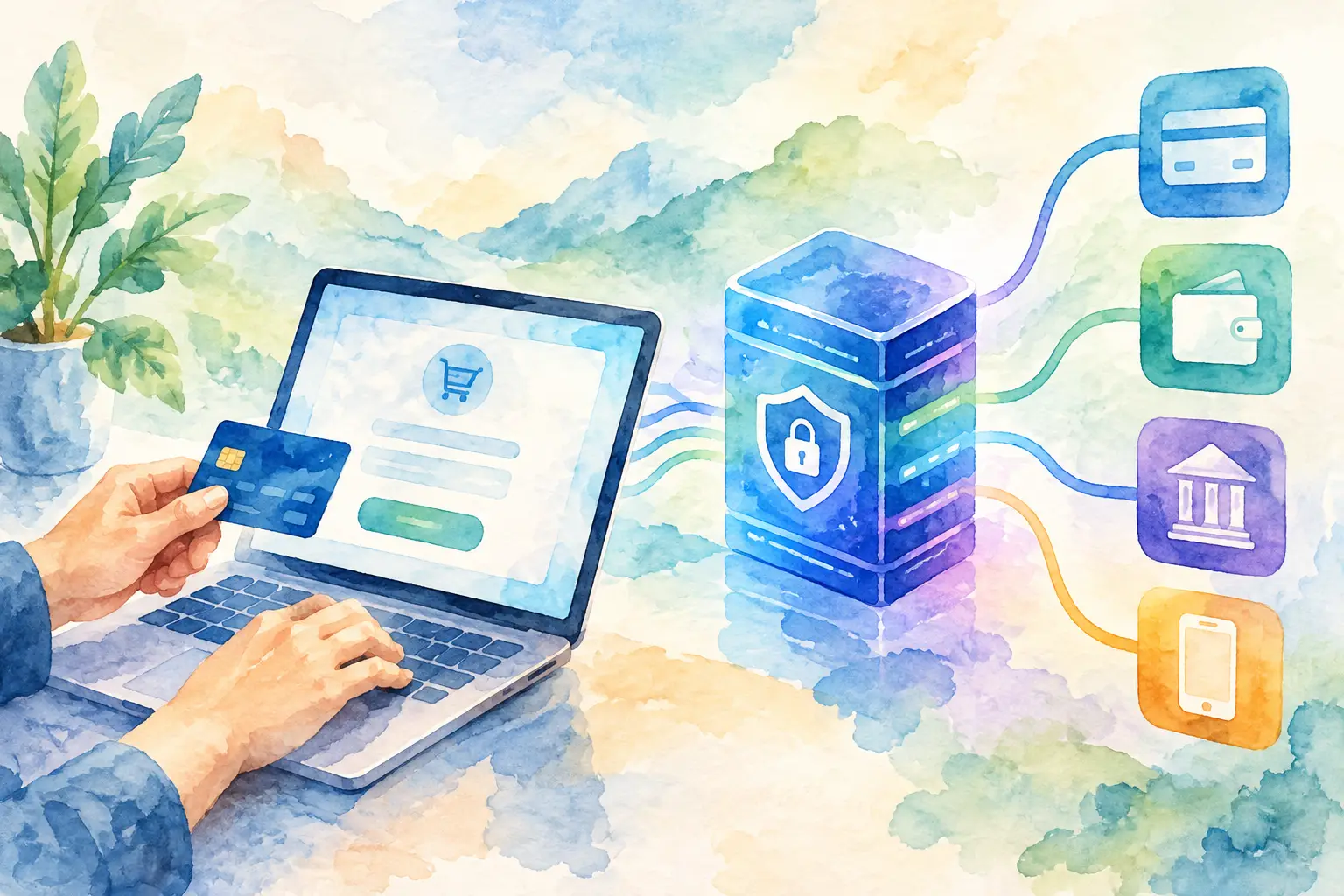
A failed payment is rarely just a checkout problem. It can be a lost customer, an abandoned high-value order, a support ticket, an inventory discrepancy, and a reconciliation issue for finance. For growth-focused retailers, payment gateway integration is core commerce infrastructure: it determines how reliably money moves through the business while protecting conversion, customer trust, and operational control.
A basic integration can accept a card. A well-engineered implementation accounts for authorization behavior, fraud controls, subscription logic, refunds, chargebacks, international requirements, and the systems that need accurate payment data after the order is placed.
Payment gateway integration is an architecture decision
The terms payment gateway, processor, acquirer, and merchant account are often used interchangeably. They are related, but they do different jobs. The gateway securely transmits payment data from the checkout to the payment processor. The processor routes the transaction through card networks and banks. The acquiring relationship enables a merchant to accept payments and receive settlement.
For a retailer, the practical question is not whether these services are technically distinct. It is whether the chosen payment stack supports the way the business sells. A direct-to-consumer brand with a standard catalog may prioritize fast wallet payments and low implementation overhead. A B2B seller may need saved payment methods, account-level payment permissions, purchase orders, partial captures, or net terms. A retailer selling customized or made-to-order products may authorize a payment at checkout but capture it only after production or shipment.
That is why the gateway cannot be selected only on transaction fees or name recognition. It must fit the order lifecycle, fulfillment model, target markets, risk profile, and commerce platform.
Start with the transaction lifecycle, not the API
Teams often begin with API documentation and checkout fields. The stronger approach starts by mapping what happens to an order after a shopper clicks Pay.
Define when an authorization is created, when it is captured, and what should happen if inventory is unavailable. Clarify whether a single order can ship in multiple packages, whether partial captures are permitted, and how canceled line items affect the original authorization. Establish the source of truth for refunds and determine how payment status returns to the ERP, order management system, customer service tools, and accounting workflows.
This mapping exposes requirements that can otherwise surface after launch. For example, an authorization may expire before a long lead-time order ships. A marketplace or multi-vendor model may require split payments or controlled payouts. A high-return category may need refund workflows that preserve clear customer communication and accurate financial records. These are business rules with technical consequences.
The same discipline matters for edge cases. Decide how the system handles a shopper who is charged but does not receive a confirmation page, duplicate submissions after a slow mobile connection, gateway timeouts, asynchronous payment updates, and failed webhook delivery. If the answer is manual investigation, the integration is not finished.
Design checkout for approval rate and speed
Checkout conversion is shaped by more than form design. The payment experience needs to load quickly, support the methods customers expect, and provide enough data for issuers and fraud tools to make good decisions.
Tokenization should be central to the design. Proper tokenization limits direct handling of sensitive card data, reduces PCI scope, and enables repeat purchases without retaining raw card details in the commerce application. It also helps create consistent customer payment profiles across account, subscription, and customer service workflows.
Authentication must be handled with equal care. Requirements such as 3D Secure can reduce fraud exposure and shift liability in certain scenarios, but overly aggressive challenges can introduce checkout friction. The right policy depends on order value, customer history, geography, product category, fraud trends, and the gateway’s risk signals. Treat authentication as a configurable decisioning layer, not a box to check during launch.
Payment methods should follow customer behavior. Cards remain essential, but digital wallets can reduce mobile friction and improve conversion by removing manual entry. Local methods may be necessary when international markets become meaningful. Buy now, pay later can increase average order value for some categories, while creating settlement, return, and customer-service considerations that need to be modeled up front.
Build the integration around reliable state changes
Commerce platforms such as Shopify, BigCommerce, and Magento provide different payment extension models. Custom Laravel or React and Next.js applications introduce additional flexibility, but they also put more responsibility on the implementation team. Regardless of stack, a payment system needs clear ownership of state.
The checkout should create a payment intent or equivalent transaction object with an idempotency key, so a retry does not create duplicate charges. The order should not be treated as paid merely because the frontend reported success. It should transition based on a verified server-side event from the payment provider. Webhooks should be authenticated, stored, processed asynchronously where appropriate, and retried safely.
A production-ready implementation typically needs controls in four areas:
- Idempotency and duplicate prevention for checkout submissions, captures, refunds, and webhook processing.
- Event logging and observability that make it possible to trace an order, transaction, authorization, capture, and refund across systems.
- Failure handling for timeouts, declined payments, delayed asynchronous methods, and third-party service interruptions.
- Reconciliation workflows that compare gateway settlements, order records, refunds, fees, and ERP or accounting entries.
These controls are not engineering extras. They reduce revenue leakage, prevent expensive manual work, and give operations teams confidence that payment data matches the real financial outcome.
Choose for flexibility without creating unnecessary complexity
A single gateway can be the right answer for many businesses. It simplifies reporting, support, and implementation. But dependency becomes more consequential as payment volume, geographic reach, or approval-rate sensitivity grows.
Multi-gateway strategies can provide redundancy, regional coverage, and intelligent routing. A retailer might route transactions based on country, currency, card type, historical approval performance, or processor availability. The trade-off is meaningful: routing logic, token portability, reconciliation, reporting, and customer support become more complex. Adding a second provider without a clear commercial or operational reason can make payments harder to manage rather than more resilient.
Platform constraints also matter. A native platform payment offering may reduce implementation time and provide a clean administrative experience, but it can limit control over routing, token use, or specialized payment flows. A third-party gateway can provide needed flexibility, especially for complex B2B, international, or custom commerce requirements, but may require deeper integration work and more disciplined maintenance.
The best choice is usually the least complex architecture that meets current requirements and preserves a credible path for the next stage of growth.
Measure payment performance after launch
Launching the integration is the beginning of payment optimization, not the end. Approval rate should be monitored by issuer, payment method, country, currency, device, customer type, and decline reason. A rising decline rate may indicate fraud-rule friction, a processor issue, poor data quality, or a shift in the customer mix.
Track authorization-to-capture conversion, refund volume, chargeback rate, duplicate-payment incidents, webhook failures, and settlement timing. Pair these technical metrics with checkout conversion and support contacts. A payment configuration that lowers chargebacks but sharply reduces approval rates may not improve the business outcome.
Periodic reviews are especially valuable after entering new markets, introducing subscriptions, changing fulfillment rules, launching a new checkout, or migrating platforms. Payment logic is tightly connected to the rest of the commerce stack. What works at launch may become a constraint when order volume, product complexity, and operational demands increase.
Lantera approaches payment work as part of the wider commerce architecture, connecting checkout behavior to fulfillment, customer service, inventory, and financial operations. The objective is not simply to make a transaction succeed. It is to build a payment foundation that keeps succeeding when the business becomes harder to operate.
The most useful question to ask is not, “Which gateway should we install?” Ask whether your payment flow can handle the next exception, market, order model, and growth milestone without forcing your team back into spreadsheets and manual fixes.